
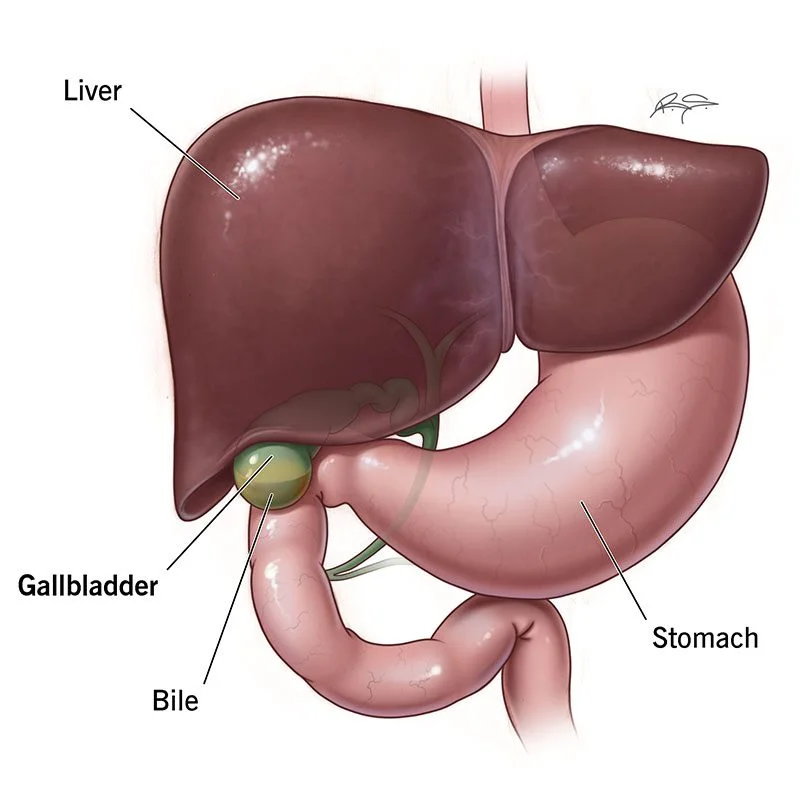
The Gallbladder is a a small, pear-shaped organ located under the liver. The gallbladder creates bile which helps the digestion of oils and fatty foods. If fats and cholesterol are not properly digested, gallstones which are hardened deposits of digestive fluid that can form in the gallbladder. Humans can live without a gallbladder but many contributing factors can be identified before surgery becomes necessary.
Post surgery complications and diet restrictions can also be negative side effects of Gallbladder removal.
The gallbladder stores and releases bile to help the digestive system break down fats.
Gallstones range in size from as small as a grain of sand to as large as a golf ball and can be composed mainly of undissolved cholesterol or bilirubin.
Why the Gallbladder Matters More Than You Think
The gallbladder is often overlooked, yet it plays a critical role in how the body processes fats, absorbs nutrients, and maintains metabolic balance. Bile is not only responsible for breaking down fats, but also for helping the body absorb fat-soluble vitamins such as A, D, E, and K.
When bile flow is impaired or inconsistent, digestion becomes inefficient. This can lead to symptoms that extend far beyond the digestive system, including fatigue, hormonal imbalance, and nutrient deficiencies.
In many cases, gallbladder issues develop gradually, often going unnoticed until symptoms become more severe.
Risk Factors for Gallstones
Risk factors for gallstones include:
- Being female
- Age 40 or older
- Native American or Hispanic of Mexican origin
- Overweight or obese
- Sedentary lifestyle
- Pregnancy
- High-fat or high-cholesterol diet
- Family history of gallstones
- Diabetes
- Medications that contain estrogen
In addition to these known risk factors, modern lifestyle patterns such as chronic stress, irregular eating habits, and processed food consumption may also contribute to poor gallbladder function.
Hormonal changes, particularly in women, can significantly influence bile composition and gallbladder activity, which helps explain why gallstones are more common in females.
Symptoms and Complications
Gallstones may cause no signs or symptoms, but can usually be detected before they get worse with a BioAcoustic evaluation.
However, if a gallstone lodges in a duct and causes a blockage, symptoms may include:
- Sudden and rapidly intensifying pain in the upper right portion of the abdomen
- Pain in the center of the abdomen below the breastbone
- Back pain between the shoulder blades
- Pain in the right shoulder
- Nausea or vomiting
These episodes are often referred to as “gallbladder attacks” and can vary in intensity and duration.
Severe complications of gallstones include:
- Inflammation of the gallbladder (cholecystitis)
- Blockage of the common bile duct
- Jaundice
- High fever with chills
- Pancreatitis
Left unmanaged, these complications can lead to more serious health concerns and may result in surgical intervention.
Understanding Gallbladder Function
The gallbladder plays a key role in digestion, particularly in how the body processes fats. When bile production or release becomes inefficient, digestion is disrupted, which can lead to further metabolic imbalance.
This can affect not only digestion, but also energy levels, nutrient absorption, and overall internal balance.
Because the gallbladder works closely with the liver, pancreas, and digestive tract, dysfunction in this area often reflects a broader imbalance within the body.
For example:
- Poor bile flow can lead to sluggish digestion
- Impaired fat absorption can affect hormone production
- Chronic digestive stress can impact gut bacteria and inflammation
This makes gallbladder health an important part of overall wellbeing, not just digestion alone.
Early Signs the Gallbladder May Be Under Stress
Before gallstones develop, the body may show early warning signs such as:
- Bloating after fatty meals
- Discomfort in the upper right abdomen
- Nausea after eating
- Difficulty digesting oils and rich foods
- Fatigue after meals
Recognising these early patterns can help prevent progression into more serious conditions.
Where BioAcoustics Fits In
BioAcoustic Gallbladder Research : We are researching the cause of this disorder and have found that certain frequencies are able to rebalance the processes that cause the formation of gallstones and help the body to return itself to a state of homeostasis.
Through voice analysis, we are able to detect patterns that may indicate stress within the digestive system and gallbladder function, allowing for early support before symptoms become more severe.
This approach allows us to work with the body’s natural processes rather than waiting for structural problems to develop.
How BioAcoustic Therapy Can Support Gallbladder Health
BioAcoustic therapy focuses on supporting the regulatory systems that influence digestion and organ function.
This may help:
- Support bile flow and digestive coordination
- Reduce stress patterns that interfere with digestion
- Improve nervous system balance, which directly affects gut function
- Enhance overall metabolic efficiency
Rather than targeting symptoms alone, this approach supports the communication between systems that control digestion and internal balance.
This is particularly valuable for individuals who:
- Experience recurring digestive discomfort
- Have been advised surgery but want to explore alternatives
- Struggle with fat digestion or nutrient absorption
- Feel their symptoms are not fully explained by standard testing
A More Complete Approach to Gallbladder Health
Gallbladder health is influenced by multiple factors, including diet, stress, hormonal balance, and overall metabolic function.
A more complete approach includes:
- Balanced nutrition
- Healthy fat intake
- Regular meal timing
- Stress management
- Supporting internal regulation
By addressing these factors together, the body is better able to maintain healthy gallbladder function and reduce the likelihood of complications.
If you are interested in joining this valuable research, and please sign up and complete the intake process from the Therapy Page on this website.
Authoritative References Used: iask.ai, my.clevelandclinic.org