
Hypothyroid Myopathy vs. Fibromyalgia: Understanding the Differences
When considering chronic, unexplained aches and pains in muscles, tendons, or joints, it is essential to differentiate between thyroid dysfunction and fibromyalgia. The symptoms of these conditions can overlap significantly, leading to potential misdiagnosis or confusion.
Hypothyroidism, characterized by inadequate production of thyroid hormone, can manifest with musculoskeletal pain due to various mechanisms such as muscle swelling pressing on nerves or tissue hypometabolism. On the other hand, fibromyalgia is diagnosed based on a cluster of symptoms like tender points, disturbed sleep, fatigue, depression, and digestive issues.
In cases where individuals experience musculoskeletal pain that could be attributed to fibromyalgia but may actually be linked to undiagnosed or undertreated hypothyroidism, addressing the underlying thyroid disorder can often alleviate the pain. Proper diagnosis and treatment of hypothyroidism are crucial in such scenarios to ensure that the root cause of the pain is effectively managed.
Hypothyroid Myopathy Symptoms
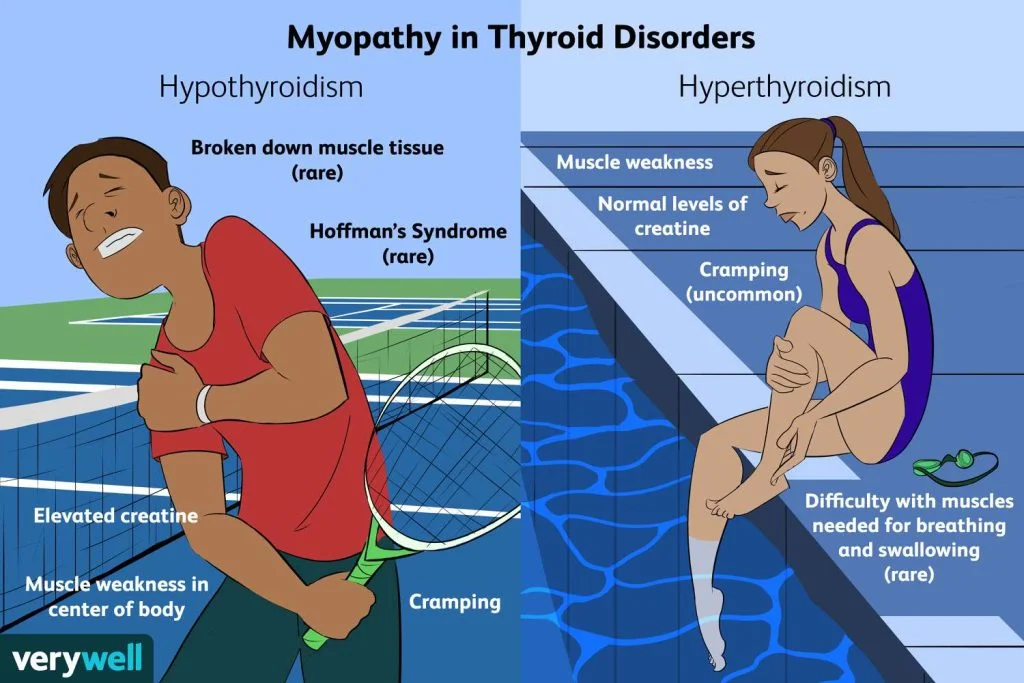
Hypothyroid myopathy is characterized by muscle weakness, aches, and cramping. The weakness is often most severe in the muscles of the thighs or shoulders. This can lead to difficulties in activities like climbing stairs or combing hair. In rare cases, individuals with hypothyroidism may experience Hoffman’s syndrome, which involves muscle hypertrophy leading to stiffness, weakness, and pain in various body parts.
Hyperthyroid Myopathy Symptoms
On the other hand, hyperthyroid myopathy presents with muscle weakness mainly in the shoulders, upper arms, hips, and thighs. While muscle cramps and aches can occur, they are less common compared to hypothyroid myopathy. Weakness in the throat, face, and respiratory muscles may also be experienced. Severe cases of hyperthyroid myopathy can lead to life-threatening conditions like rhabdomyolysis.
What Is Hypothyroid Myopathy?
Hypothyroid myopathy is a muscle disorder caused by low levels of thyroid hormones (T3 and T4), which are essential for regulating metabolism, muscle energy, and protein repair.
Without enough thyroid hormone:
– Mitochondria (energy producers) in muscle cells underperform → less ATP → muscle fatigue and weakness.
– Muscle proteins break down more easily, causing cramps and stiffness.
– Glycogen accumulates in muscles, making contractions sluggish.
More clinical details:
– Gradual onset over months or years.
– Mainly affects proximal muscles (thighs, shoulders) → trouble climbing stairs or lifting arms.
– Reflexes slow down, especially at the ankle.
– Blood tests may show high creatine kinase (CK) and abnormal thyroid labs (high TSH, low T4).
Treatment
– Standard care → thyroid hormone replacement (levothyroxine).
– Bioacoustic therapy → delivers low-frequency sound to stimulate thyroid function, improve metabolism, and support muscle recovery.
What is Hyperthyroid Myopathy?
Hyperthyroid myopathy is a muscle disorder caused by excess thyroid hormones (T3 and T4), typically seen in people with hyperthyroidism.
When thyroid hormone levels are too high:
- Muscle metabolism becomes overactive, leading to protein breakdown
- Muscle fibers shrink and lose strength
- Progressive weakness, tremors, and fatigue develop
Common symptoms include:
✅ Muscle weakness
✅ Difficulty climbing stairs or lifting objects
✅ Muscle wasting over time
✅ Tremors
✅ Fatigue and exercise intolerance
✅ Hyperreflexia
Additional signs:
- Weight loss
- Rapid heartbeat
- Heat intolerance
- Anxiety
- Insomnia
While fibromyalgia does not have an official diagnostic test and is identified based on symptoms, hypothyroidism diagnosis involves blood testing including TSH, T3, T4, and antibodies.
What Is Fibromyalgia?
Fibromyalgia is a chronic pain condition caused by abnormal pain processing in the brain and spinal cord.
In fibromyalgia:
- The nervous system amplifies pain signals
- Neurotransmitters are imbalanced
- Triggers include stress, infection, or trauma
Symptoms include:
- Widespread pain
- Fatigue
- Poor sleep
- Brain fog
- Headaches and digestive issues
Treatment
– Standard care → exercise, CBT, medications
– Bioacoustic therapy → regulates pain signals, improves sleep, reduces stress
Key Differences at a Glance
| Feature | Hypothyroid Myopathy | Fibromyalgia |
|---|---|---|
| Main problem | Low thyroid hormone | Nervous system amplification |
| Pain type | Stiffness, cramps | Widespread chronic pain |
| Weakness | Common | Not typical |
| Labs | Abnormal | Normal |
| Standard Treatment | Hormone replacement | Exercise, stress reduction |
| Bioacoustic Therapy | Supports thyroid function | Calms pain signals |
Why Misdiagnosis Happens
10–15% of fibromyalgia patients may have undiagnosed thyroid disorders. Both conditions share fatigue, muscle discomfort, and cognitive symptoms.
Bioacoustic Therapy: A Promising Complement
– Detects thyroid frequency imbalances
– Supports hormone regulation
– Calms nervous system activity
– Improves sleep and recovery
Final Takeaway
Accurate diagnosis matters. Bioacoustic therapy can help both identify and support these conditions.
In conclusion, both hypothyroidism and hyperthyroidism can manifest as myopathies with distinct symptoms affecting different muscle groups.
BioAcoustic Thyroid & Fibromyalgia Research : Through our research we are now able to assess for the differences between thyroid functioning and fibromyalgia and provide sound presentation to help rebalance the body.
Authoritative References Used: https://iask.ai/, https://www.verywellhealth.com