

Many health issues find thyroid function at their foundation. Essential to energy production, reproductive issues, immune stability, PMS, metabolism, aging, hormone use and stress tolerance are all related to thyroid function. (Source: Soundhealthportal.com)
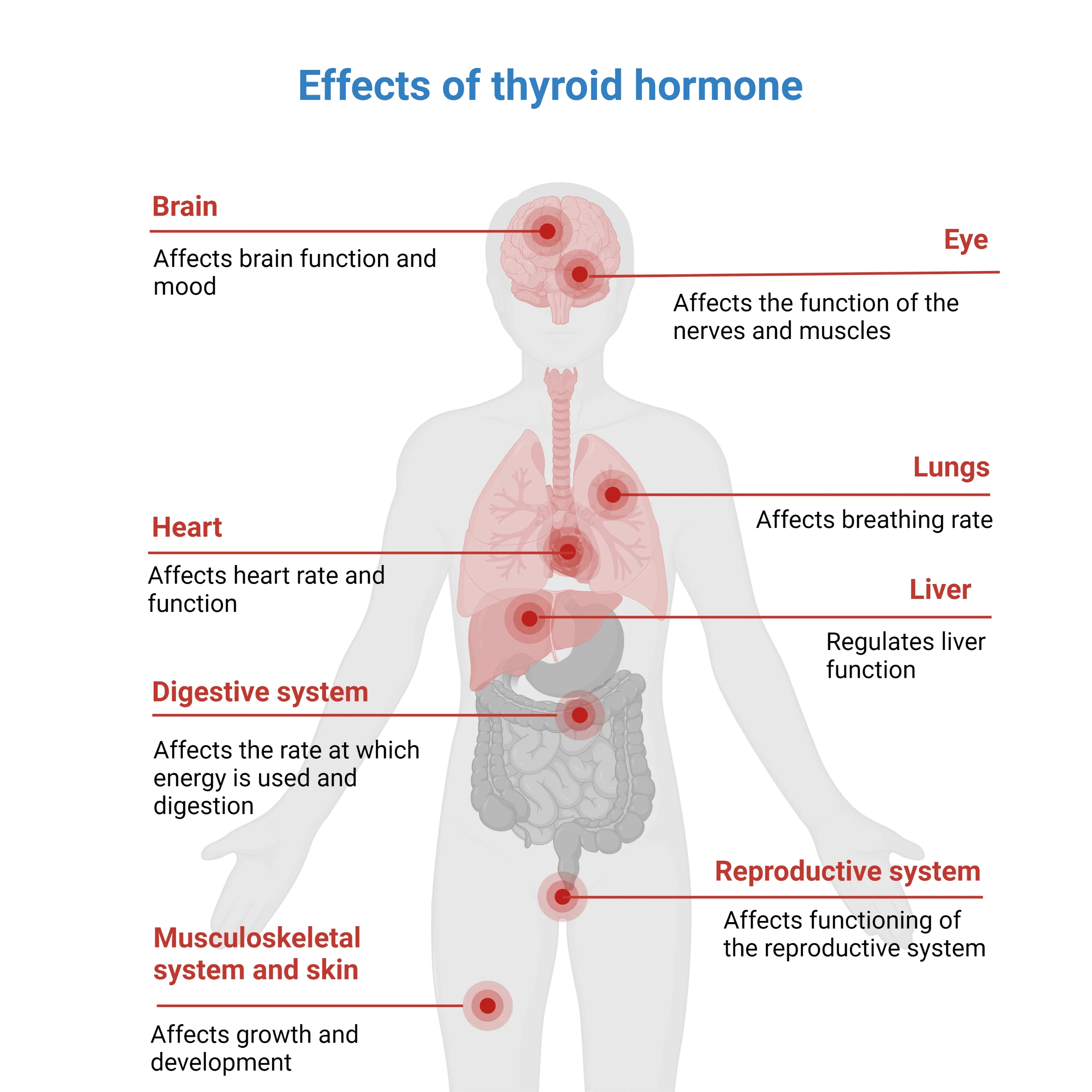
A balanced Thyroid gland is essential to your overall health because it is responsible for regulating many things. For example, your sleep patterns, your metabolism, temperature, reproductive hormones, Brain functioning, the Lungs and Heart, your digestion and therefore weight gain and weight loss, the Eyes, the Liver and more.
Why the Thyroid Is So Important
The thyroid gland acts as a master regulator within the body. It influences how quickly or slowly your body uses energy, how efficiently your organs function, and how well your systems communicate with each other.
When thyroid function is balanced, the body operates smoothly. When it becomes dysregulated, it can affect nearly every system in the body.
This is why thyroid imbalance often presents with a wide range of symptoms that may not immediately seem connected.
How the Thyroid Works
The thyroid gland produces hormones that regulate the body’s metabolic rate, growth and development.
It plays a role in controlling:
- Heart function
- Muscle function
- Digestive processes
- Brain development and cognitive performance
- Bone maintenance
Its correct functioning depends on a good supply of iodine from the diet. Cells producing thyroid hormones are highly specialised in extracting iodine from the blood and incorporating it into thyroid hormones.
The thyroid gland is a butterfly-shaped endocrine gland located in the neck that produces and releases hormones to regulate metabolism. It consists of two lobes connected by an isthmus, and secretes three hormones: triiodothyronine (T3), thyroxine (T4), and calcitonin.
These hormones act as chemical messengers, influencing how cells convert nutrients into energy.
Types of Thyroid Conditions
Thyroid disorders include:
- Hyperthyroidism
- Hypothyroidism
- Thyroid inflammation (thyroiditis)
- Thyroid enlargement (goitre)
- Thyroid nodules
- Thyroid cancer
Each of these conditions can affect the body in different ways depending on whether hormone production is increased, decreased, or structurally altered.
Hypothyroidism (Underactive Thyroid)
Hypothyroidism, a condition where the thyroid gland does not produce enough hormones, can lead to weight gain or difficulty in losing weight.
Other common symptoms include:
- Fatigue and low energy
- Cold sensitivity
- Dry skin and hair
- Depression or low mood
- Slowed metabolism
Because metabolism slows down, many systems in the body become less efficient.
However, with the right treatment and lifestyle changes, it is possible to manage weight effectively even with hypothyroidism.
Hyperthyroidism (Overactive Thyroid)
Hyperthyroidism, also known as overactive thyroid, occurs when the thyroid gland produces an excess of thyroid hormones.
This leads to an accelerated metabolic state, which can affect:
- Heart rate
- Breathing
- Weight regulation
- Digestion
- Mood stability
Common symptoms include:
- Weight loss despite normal eating
- Rapid heartbeat
- Anxiety or restlessness
- Heat intolerance
- Sleep disturbances
If left untreated, hyperthyroidism can lead to complications affecting the heart, bones, muscles, menstrual cycle, and fertility.
Early Signs of Thyroid Imbalance
Before a thyroid condition is diagnosed, the body often shows early warning signs such as:
- Unexplained fatigue
- Changes in weight
- Brain fog or poor concentration
- Hormonal irregularities
- Digestive changes
- Temperature sensitivity
These early signs are often overlooked or attributed to stress or lifestyle, which can delay proper understanding of the underlying issue.
The Thyroid and Whole-Body Health
The thyroid does not function in isolation. It is closely connected to:
- The adrenal glands (stress response)
- The reproductive system (hormonal balance)
- The digestive system (nutrient absorption)
- The nervous system (energy and regulation)
This means that thyroid imbalance is often part of a broader system imbalance rather than a single isolated issue.
Where BioAcoustics Fits In
BioAcoustic Thyroid Research : Our research has shown that by rebalancing the hormones that are out of order, we are able to help the body to return itself to a state of homeostasis. Results have shown weight loss to be effective.
Through voice analysis, we are able to identify patterns that may indicate thyroid imbalance, hormonal disruption, and metabolic stress.
How BioAcoustic Therapy Can Support Thyroid Function
BioAcoustic therapy focuses on supporting the communication between systems that regulate hormone production and metabolism.
This approach may help:
- Support hormonal balance (T3, T4 regulation)
- Improve metabolic efficiency
- Reduce stress patterns that impact thyroid function
- Support energy production at a cellular level
Rather than focusing only on symptoms, this approach supports the underlying regulatory systems that influence thyroid function.
This is particularly helpful for individuals who:
- Feel unwell despite normal test results
- Experience ongoing fatigue or weight changes
- Have complex or overlapping symptoms
A More Complete Approach
Supporting thyroid health requires a combination of:
- Nutrition (including iodine and micronutrients)
- Stress management
- Sleep quality
- Hormonal balance
- Internal system regulation
When these factors are addressed together, the body is better able to maintain balance and function effectively.
If you are interested in joining this valuable research, and please sign up and complete the intake process from the Therapy Page on this website.